
You’re scrolling through TikTok comments or a group chat, and there it is again: ICL. No explanation, no context clue, just three letters sitting in the middle of a sentence like everyone’s supposed to already know what they mean. If you paused and thought, “wait, what does ICL actually mean here?” you’re not the only one typing that exact question into Google this week.
This guide breaks down every real meaning of ICL, from the texting slang your teenager uses daily to the medical and business definitions that show up in completely different conversations. By the end, you’ll never have to guess again.
What is Icl in Text
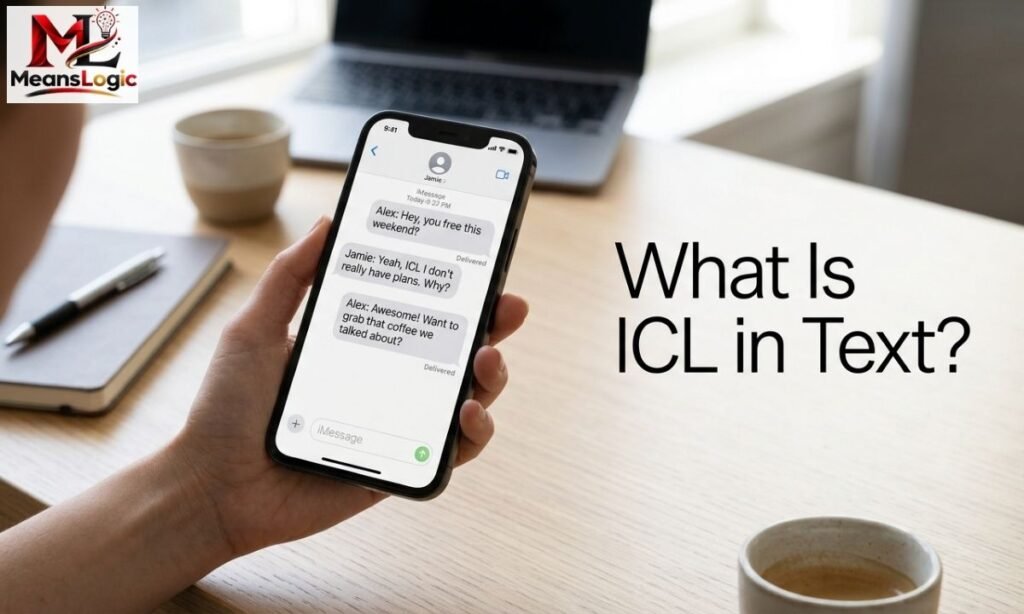
At its core, ICL is an initialism, a short form built from the first letters of a phrase. In texting and social media, ICL stands for “I Can’t Lie.” People drop it into a sentence right before sharing an honest opinion, a blunt confession, or a genuine reaction they want to emphasize.
It works almost identically to other honesty markers like “TBH” (to be honest) or “NGL” (not gonna lie). If a friend texts “ICL, that new album is actually fire,” they’re telling you they mean it with no sarcasm, no exaggeration, just a real opinion delivered fast.
A smaller group of users also use ICL to mean “I Care Less,” a phrase that signals indifference rather than honesty. This second meaning is far less common, but it does exist, and it can cause real confusion if you read it the wrong way.
What Does ICL Mean? A Clear Definition First
Before diving into platform-specific usage, here’s the simple answer:
- Primary meaning: “I Can’t Lie” used to introduce an honest, sincere, or emphatic statement.
- Secondary meaning: “I Care Less” used to express indifference or detachment.
- Non-slang meanings: Depending on the field, ICL can also stand for Implantable Collamer Lens (medicine), Instrument Check List (aviation), or even a company name like ICL Group (finance).
The version that applies always depends on where you’re reading it and who wrote it. A doctor’s note, a stock ticker, and a Snapchat caption are three completely different worlds, even though they might use the same three letters.
ICL Meaning in Text and Social Media
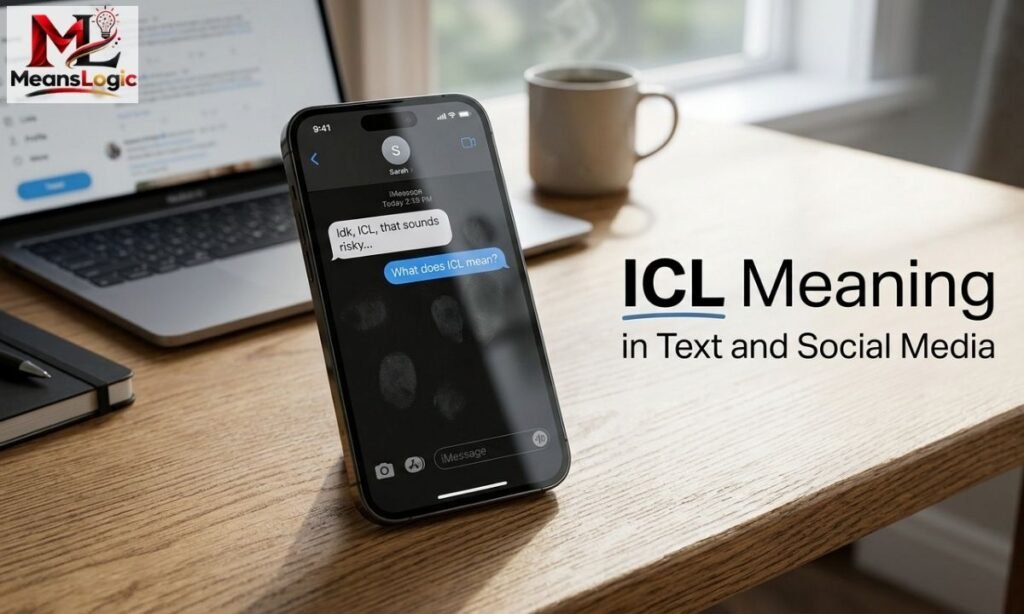
Texting culture runs on speed. Character limits, fast-scrolling feeds, and short attention spans all pushed users toward compact expressions, and ICL fits that mold perfectly.
Here’s how it typically shows up:
- At the start of a sentence: “ICL, this is the best burger I’ve had all year.”
- In the middle of a sentence: “That test was, ICL, way harder than I expected.”
- As a stand-alone reply: “ICL ” as a reaction to something surprising or funny.
The phrase carries emotional weight. It signals to the reader: pay attention, what comes next is real. That’s part of why it resonates so strongly with younger users who want their texts to feel personal rather than robotic.
Common Examples
| Text Message | Meaning |
| “ICL, I miss the old school schedule.” | Honest admission |
| “This show is boring ICL.” | Blunt opinion |
| “ICL about the drama, I’m just staying out of it.” | Indifference (I Care Less) |
ICL Meaning in Medical
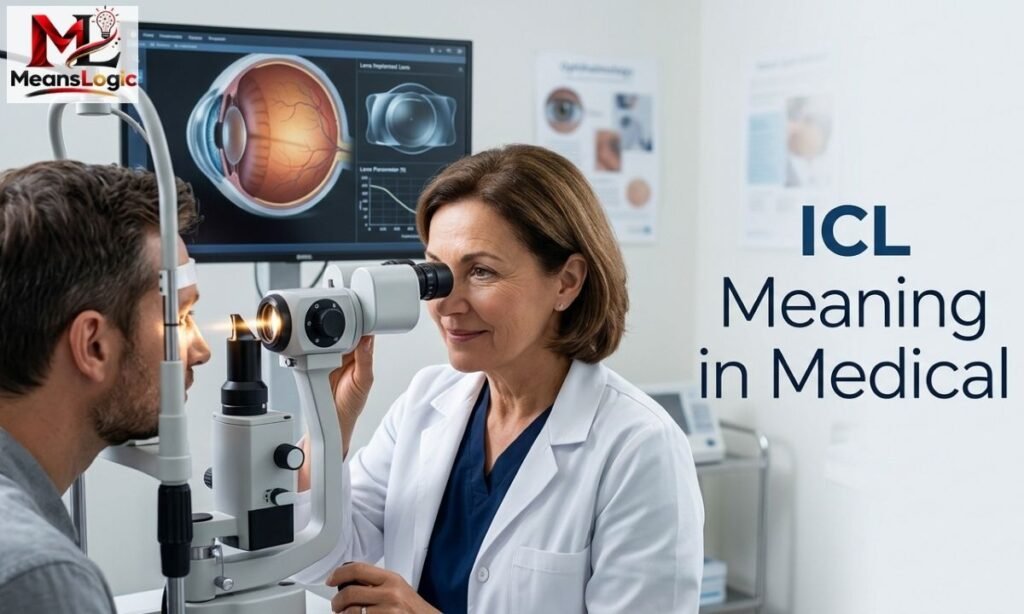
Step outside of texting, and ICL takes on a completely different identity. In ophthalmology, ICL stands for Implantable Collamer Lens sometimes also referred to as an Implantable Contact Lens.
It’s a vision-correction device surgically placed inside the eye to treat nearsightedness, farsightedness, or astigmatism. Unlike LASIK, which reshapes the cornea using a laser, an ICL procedure inserts a thin, biocompatible lens between the iris and the natural lens without removing any corneal tissue.
Key facts about the medical ICL:
- It’s often recommended for patients with thin corneas who aren’t good LASIK candidates.
- The lens is designed to stay in the eye permanently, though it can be removed if needed.
- Recovery time is generally short compared to some other vision-correction surgeries.
If a doctor mentions “ICL” during a consultation, they are almost certainly not talking about slang and confusing the two contexts is a classic way to misunderstand an entire conversation.
ICL Beyond Slang: Professional and Technical Meanings
Texting and medicine aren’t the only fields where ICL shows up. The acronym has dozens of recorded meanings across different industries, including:
- Aviation: Instrument Check List, a safety document pilots review before takeoff.
- Engineering/Physics: Sometimes used for terms tied to signal interference or circuit behavior, depending on the subfield.
- Education: Referring to specific institutional codes, labs, or league names at certain universities.
- Sports: ICL has been used to reference cricket and other league competitions in some regions.
None of these definitions overlap with the texting slang meaning, which is exactly why context is the single most important tool for decoding ICL correctly.
ICL Meaning in Business and Technology
In corporate and financial settings, ICL takes on yet another life. A few notable examples:
- ICL Group is a publicly traded specialty minerals and chemical company, so “ICL” frequently appears in stock market headlines and financial news reports.
- In banking, ICL-related terms have been used in the context of digital check imaging and clearing systems.
- In IT and computing history, International Computers Limited (ICL) was a major British computer manufacturer, later acquired by Fujitsu.
Seeing ICL in a finance article or a tech history piece has zero connection to the “I Can’t Lie” slang. Readers unfamiliar with the business world sometimes assume every acronym they see online must be internet slang but that assumption breaks down fast outside of casual chat apps.
Context Is Everything: How to Decode ICL Instantly
Since ICL genuinely has multiple valid meanings, the fastest way to decode it is to ask three quick questions:
- Where am I reading this? A text message, a medical brochure, and a finance article all point to different definitions.
- Who wrote it? A friend, a doctor, or a journalist will use ICL very differently.
- What surrounds it? The sentence before and after ICL almost always confirms the intended meaning within seconds.
In casual chats and comment sections, “I Can’t Lie” is the overwhelming favorite. Everywhere else, professional or technical context takes over.
ICL vs. Other Common Acronyms
It helps to see ICL next to acronyms it’s often confused with or compared to.
| Acronym | Meaning | Tone |
| ICL | I Can’t Lie | Honest, emphatic |
| TBH | To Be Honest | Neutral, straightforward |
| NGL | Not Gonna Lie | Casual, slightly playful |
| FR | For Real | Emphasis, agreement |
| IRL | In Real Life | Describes real-world events |
| ICYMI | In Case You Missed It | Informational recap |
While ICL, TBH, and NGL all signal honesty, the feel is slightly different. TBH sounds more neutral and matter-of-fact. NGL feels a bit lighter and more playful. ICL tends to feel more personal and emotionally direct; it’s often used right before something a little blunt or vulnerable.
When You Should Use ICL and When You Shouldn’t
Like most slang, ICL fits some situations far better than others.
Good times to use ICL:
- Texting friends or close contacts
- Casual social media captions or comments
- Group chats where informal tone is expected
Times to avoid ICL:
- Work emails or professional messages
- Academic writing or formal reports
- Conversations with people who may not be familiar with internet slang
If clarity and professionalism matter more than personality in a given message, it’s safer to spell out the intended meaning “honestly” or “to be candid” work fine as formal substitutes.
ICL vs Similar Texting Acronyms
Beyond the honesty-focused acronyms already mentioned, ICL sits inside a wider family of texting shorthand people use daily. A few worth knowing:
- SMH – Shaking My Head (disappointment or disbelief)
- IMO / IMHO – In My Opinion / In My Humble Opinion
- FWIW – For What It’s Worth
- TMI – Too Much Information
None of these are direct substitutes for ICL, but they belong to the same broader category of quick emotional or opinion-based shorthand that keeps digital conversation fast and expressive.
How ICL Spread Across the Internet
The phrase “I can’t lie” has roots in everyday spoken English, long used as a casual way to introduce blunt honesty before texting even existed. As mobile messaging and character limits pushed people toward shorter forms, “I can’t lie” naturally compressed into ICL the same way “talk to you later” became TTYL.
Its spread accelerated through:
- Twitter/X, where quote-tweets and replies popularized short honesty markers
- TikTok captions, where authenticity became a core part of engagement
- Snapchat and Instagram, where quick, casual replies dominate
Once major platforms adopted it, ICL became a fixture of everyday internet slang rather than a niche or regional expression.
Quick Comparison Table: ICL Across Contexts
| Context | Meaning of ICL | Typical Users |
| Texting/Social Media | I Can’t Lie | Gen Z, young adults |
| Texting/Social Media (less common) | I Care Less | Casual chat users |
| Medical | Implantable Collamer Lens | Doctors, patients, ophthalmology sources |
| Aviation | Instrument Check List | Pilots, aviation staff |
| Finance/Business | ICL Group / banking terms | Investors, financial media |
| Technology History | International Computers Limited | Tech historians, industry writers |
Why Understanding ICL Meaning Actually Matters
Misreading an acronym might sound trivial, but small misunderstandings add up. Texting lacks tone of voice and facial expression, so a wrongly interpreted acronym can shift the entire mood of a conversation. Someone might read “ICL” as indifference when the sender actually meant deep honesty or vice versa.
Beyond texting, using slang in the wrong setting can hurt credibility. Dropping “ICL” into a client email or an academic paper reads as unprofessional, even if the sentence itself is fine. Knowing when and when not to use an acronym is part of communicating clearly in any setting.
Case Study: How One Acronym Changes Meaning
Consider three real-world scenarios using the exact same three letters:
- A teenager texts a friend: “ICL, I actually liked the movie more than the book.” Here, ICL signals honest enthusiasm and a personal, sincere opinion.
- An eye clinic’s website describes a procedure: “Patients who aren’t candidates for LASIK may be good candidates for ICL.” Here, ICL refers to a surgical lens implant with zero emotional tone.
- A financial news headline reads: “ICL shares rose 4% following the earnings report.” Here, ICL refers to a publicly traded company, unrelated to slang or medicine.
Three completely different meanings, one identical acronym. This is the clearest proof that context, not the letters themselves, carries the meaning.
Frequently Asked Questions
What does ICL mean in a text message?
It usually means “I Can’t Lie,” used to introduce an honest or emphatic statement.
Can ICL mean “I Care Less”?
Yes, though it’s a much less common interpretation and depends heavily on tone and context.
Is ICL appropriate for work emails?
No. It’s informal slang and should be avoided in professional or academic writing.
What does ICL mean in medicine?
It stands for Implantable Collamer Lens, a device used to correct vision.
Is ICL the same as LASIK?
No. ICL involves implanting a lens inside the eye, while LASIK reshapes the cornea with a laser.
Where did the slang ICL come from?
It evolved from the spoken phrase “I can’t lie,” shortened for texting and popularized on platforms like Twitter and TikTok.
How do I know which meaning of ICL applies?
Looking at the surrounding context, the platform, the topic, and who is writing it will almost always make the intended meaning obvious.
Final Thoughts
ICL is a perfect example of how three letters can carry completely different weight depending on where they appear. In a text thread, it’s an honesty marker that adds warmth and authenticity to a message. In a medical office or a finance article, it refers to something entirely unrelated to slang.
The real skill isn’t memorizing every possible meaning it’s learning to read context quickly. Once you know what to look for, decoding ICL takes only a few seconds, no matter which conversation you’re in.

I’m a meaning-focused writer with 4 years of experience exploring words, names, phrases, symbols, and everyday expressions. My goal is to make confusing meanings simple, clear, and easy to understand. I research each topic carefully to provide useful and reliable explanations. Through MeansLogic, I help readers discover meanings and understand language with confidence.