
Scrolling through a group chat or a comment section and stumbling on “TBF” can feel like hitting a small speed bump in the conversation. It’s short, it’s everywhere, and it usually shows up right before someone flips their own argument around.
This guide walks through exactly what TBF means, how it shows up across texting, Snapchat, TikTok, and even football commentary, and how to use it naturally without sounding out of place. By the end, you’ll never have to pause and guess again.
What Does TBF Mean in Text Messages?
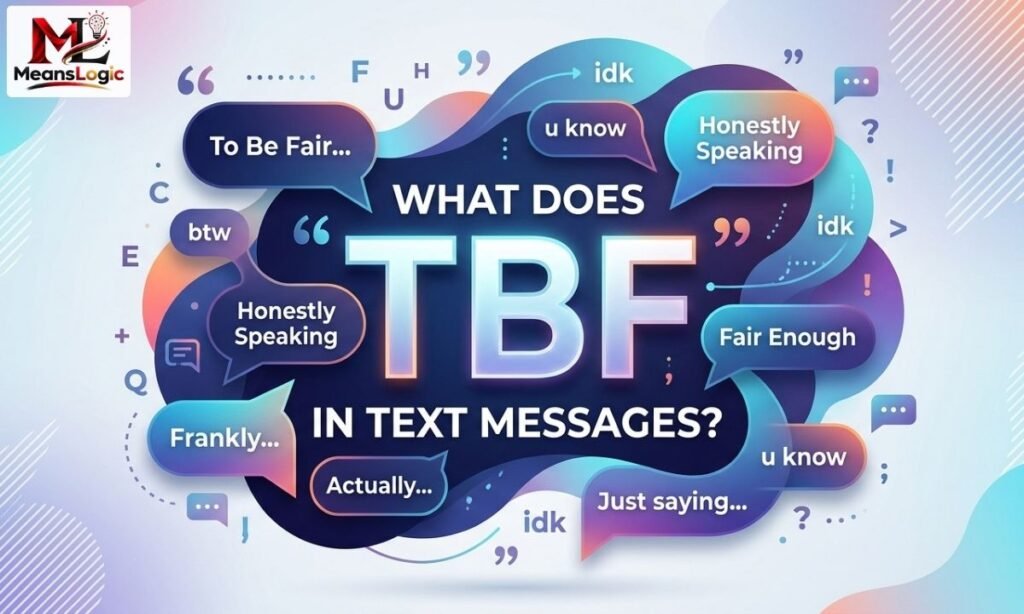
TBF stands for “To Be Fair.” It’s used to introduce a balanced or slightly opposing viewpoint, usually right after someone has made a statement or judgment.
It works a lot like saying “on the other hand” or “in fairness,” but in a much shorter package built for fast typing.
- Full form: To Be Fair
- Category: Texting abbreviation / conversational slang
- Common use: Softening a statement, adding balance, or acknowledging another side
- Tone: Casual, thoughtful, sometimes a little sarcastic
A typical example: “That movie was pretty bad. TBF, I did watch it half asleep.”
Why Is TBF So Popular in Texting and Social Media?
TBF has become a staple of digital conversation because it does a lot of work in very few characters. Here’s why people reach for it so often:
It’s quick to type:
Three letters replace an entire phrase.
It adds nuance fast:
TBF signals a shift in perspective without needing a full sentence.
It softens opinions:
Adding TBF before a counterpoint makes disagreement feel less blunt.
It fits casual tone:
It reads as conversational rather than formal or stiff.
It’s widely recognized:
Almost everyone active on texting apps or social media already knows what it means, so there’s no confusion.
Because it balances speed with meaning, TBF has stuck around across generations of texters, not just the newest slang trends.
What Does TBF Mean Slang?
As slang, TBF keeps its core meaning of “To Be Fair,” but it often carries a slightly more relaxed or offhand feel than the formal phrase would suggest.
In slang usage, TBF is commonly used to:
- Add a quick disclaimer to an opinion (“TBF I’ve never actually tried it”)
- Soften criticism before saying something negative
- Acknowledge a fair point someone else just made
- Add self-aware humor when admitting a flaw or mistake
Unlike more dramatic slang terms, TBF doesn’t carry strong emotion on its own. It’s more of a conversational connector, smoothing the transition between two slightly different points of view.
TBF Meaning in Football
Football commentary, especially in British and international fan communities, has its own heavy use of TBF. Fans and commentators use it constantly when discussing matches, players, and decisions.
Common football contexts include:
- Defending a controversial referee decision (“TBF, that was probably a foul”)
- Giving credit to an underperforming team (“TBF, they were missing three starters”)
- Balancing criticism of a player with context (“He missed that shot, but TBF, the pass was poor”)
- Discussing match analysis on forums, Twitter/X, and fan pages
Because football conversations often involve quick opinions and counter-opinions, TBF fits naturally into the back-and-forth style of match-day chat.
How TBF Is Commonly Used in Text Messages
In everyday texting, TBF usually shows up in one of a few predictable patterns:
- At the start of a message: “TBF, I probably would’ve done the same thing.”
- In the middle of a sentence: “It was annoying, but TBF, I did show up late.”
- As a standalone reply: Someone makes a point, and the response is simply “tbf.”
It’s rarely used to start a brand-new topic that role usually belongs to shorthand like HBU, which exists specifically to redirect a conversation back to the other person. Instead, it almost always responds to something that was just said, either by the same person reconsidering their point or by someone else in the conversation.
What Does TBF Mean on Snapchat?
On Snapchat, TBF holds the same meaning as everywhere else: “To Be Fair.” The context, though, tends to be more personal since Snapchat conversations usually happen between close friends.
You’ll often see TBF on Snapchat when someone is:
- Reconsidering a complaint mid-story (“ugh he never texts back… tbf neither do I”)
- Adding balance to a Snap caption or reply
- Softening a joke about a friend
- Responding to a Snap with a quick, fair-minded take often right after someone asks WYF
Because Snapchat conversations move quickly and casually, TBF fits right into the platform’s short, back-and-forth messaging style.
Tone and Emotional Context of TBF
TBF isn’t loud or dramatic. Its main job is to add balance and thoughtfulness to a conversation, which shapes the tone in a few specific ways:
- It signals that the speaker is being reasonable or open-minded.
- It can soften criticism, making a comment feel less harsh.
- It sometimes carries light sarcasm, especially when used to acknowledge an obvious point.
- It rarely signals strong emotion like excitement or anger.
Because of this, TBF tends to make a message feel more measured and conversational, rather than intense or reactive.
Examples of TBF in Real-Life Text Conversations
Here are a few natural examples showing how TBF fits into everyday texting:
- “That test was so unfair. TBF, I didn’t study much either.”
- “She was kind of rude earlier. TBF, she’s had a rough week.”
- “I can’t believe he forgot again. TBF, he did apologize right away.”
- “TBF, I probably wouldn’t have noticed if you hadn’t pointed it out.”
In each case, TBF introduces a small shift in perspective, adding context or fairness to the original statement.
Is TBF Formal or Informal?
TBF is strictly informal. It belongs to casual texting, social media comments, and everyday conversation, not formal writing.
Informal settings:
Texting friends, group chats, social media captions, casual comments
Formal settings:
Emails, business communication, official documents, academic writing
Using TBF in professional contexts can come across as too casual or even confusing to readers who aren’t familiar with texting shorthand.
TBF vs TBH: What’s the Difference?
TBF and TBH are often mixed up because they look similar and both start conversations with a personal take. However, their meanings are different.
| Term | Full Meaning | Purpose | Example |
| TBF | To Be Fair | Adds balance or a fair counterpoint | “TBF, he did warn us in advance.” |
| TBH | To Be Honest | Expresses a personal, honest opinion | “TBH, I didn’t like the ending.” |
The easiest way to remember the difference: TBF brings balance to a conversation, while TBH shares a straightforward, honest opinion.
Common Misunderstandings About TBF
A few mix-ups happen frequently with TBF:
Confusing it with TBH:
As shown above, these two are not interchangeable.
Assuming it always means agreement:
TBF can introduce disagreement just as often as it introduces support.
Thinking it’s sarcastic by default:
While it can carry light sarcasm, most uses are genuinely intended to add fairness.
Overusing it in formal writing.
Some people accidentally slip it into work messages out of habit.
Understanding these small distinctions helps avoid awkward misreadings in text conversations.
When NOT to Use TBF in Text Messages
While TBF is flexible, there are moments where it doesn’t quite fit:
- In professional emails or workplace chats
- When introducing a completely new topic unrelated to the previous statement
- In serious or emotionally heavy conversations, where it might come across as dismissive
- In formal essays, reports, or academic writing
Sticking to casual, conversational settings keeps TBF sounding natural rather than out of place.
Alternatives to TBF in Text Messages
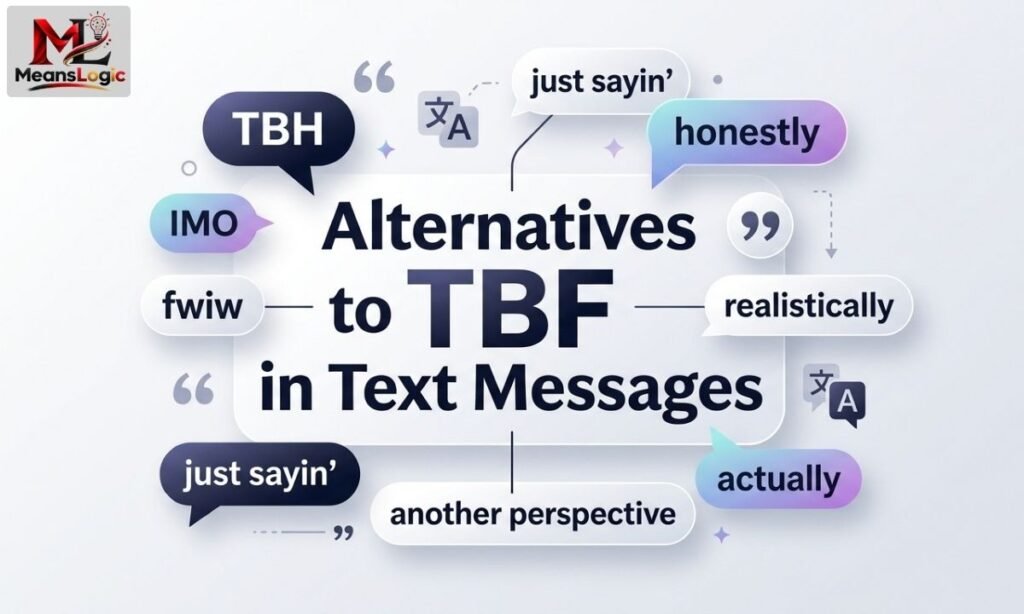
If TBF doesn’t quite fit the moment, a few alternatives carry a similar meaning:
- In fairness a slightly more formal version of the same phrase
- Then again introduces a second perspective
- On the other hand classic phrase for balancing a statement
- Fair point acknowledges someone else’s argument directly
- Honestly though close in tone, though leans more toward TBH’s meaning
- ICL used when admitting something honestly, with a slightly different tone than TBF
These alternatives work well in contexts where TBF might feel too casual or where variety helps keep a conversation from repeating the same shorthand.
TBF in Social Media and Online Culture

TBF shows up constantly across platforms like Twitter/X, Instagram comments, TikTok, and Reddit threads. Its popularity in online culture comes down to a few key factors:
- It fits naturally into fast, opinion-driven comment sections.
- It helps soften disagreements in public conversations, reducing the chance of conflict.
- It’s widely understood across different online communities, making it a safe, universally recognized shorthand.
- It pairs easily with other slang like TBH, ngl, and fr without clashing in tone.
Because online conversations often involve quick reactions and counter-reactions, TBF has become a natural fit for balancing tone in public digital spaces.
Why Understanding TBF Matters?
Knowing what TBF means, and using it correctly, helps in a few practical ways:
- It prevents confusion when reading fast-paced conversations.
- It allows for clearer, more balanced communication in casual writing.
- It helps you match the tone of the platform you’re using, whether that’s Snapchat, TikTok, or Twitter/X.
- It avoids the awkwardness of misusing slang in the wrong setting, like a formal email.
Small as it is, TBF plays a real role in how nuance and fairness get expressed in short-form digital conversations.
Frequently Asked Questions
What does TBF mean in a text?
TBF stands for “To Be Fair,” used to add balance or a fair counterpoint to a statement.
Is TBF the same as TBH?
No, TBF means “To Be Fair” while TBH means “To Be Honest.” They serve different purposes.
Can TBF be used in professional messages?
No, it’s informal slang best kept for casual texting and social media, not work communication.
Does TBF always mean disagreement?
Not always. It can support a point or introduce a slightly different perspective, not just disagreement.
Is TBF used outside of texting?
Yes, it’s common in football commentary, social media comments, and casual spoken conversation as well.
Conclusion
TBF is a simple but useful piece of texting shorthand that means “To Be Fair.” It shows up everywhere from casual texts to football chat, always doing the same basic job: adding balance and context to a statement.
Now that you know how it works, how it differs from TBH, and where it fits best, you can read it with confidence and use it naturally in your own conversations.

I’m a meaning-focused writer with 4 years of experience exploring words, names, phrases, symbols, and everyday expressions. My goal is to make confusing meanings simple, clear, and easy to understand. I research each topic carefully to provide useful and reliable explanations. Through MeansLogic, I help readers discover meanings and understand language with confidence.




1 thought on “TBF Meaning in Text Messages: What It Really Means, How to Use It, and Why It Matters”