
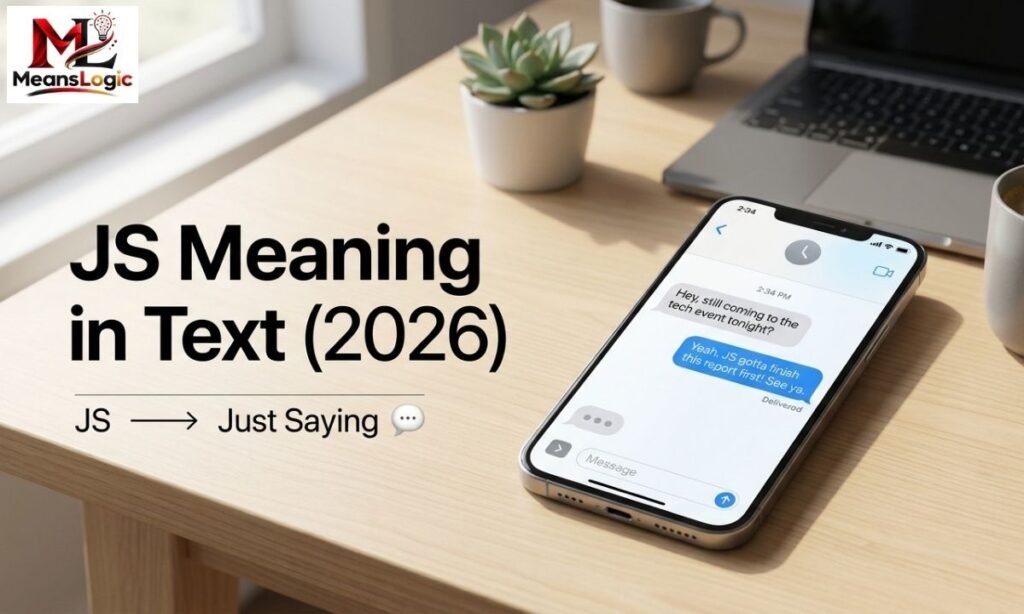
Ever gotten a text that just says “js” and had no idea what your friend actually meant? You’re not alone. This tiny abbreviation shows up constantly in DMs, group chats, and comment sections, and its meaning shifts depending on tone, timing, and who’s sending it.
In this guide, you’ll learn exactly what JS means in text, how it changes meaning across platforms and generations, when to use it, when to avoid it, and smarter alternatives that keep your messages clear. By the end, you’ll never misread a “js” text again.
Why “JS” Shows Up Everywhere in Modern Texting?
Texting culture rewards speed. People type on the move, in class, or mid-conversation across five apps at once, so abbreviations like “js” save time and thumb-taps. It also softens messages, letting someone downplay a comment without deleting it entirely. That combination of speed and emotional cushioning is why “js” has become a texting staple in 2026.
Abbreviated texting language isn’t new, but its role has changed. Where early SMS shorthand like “lol” or “brb” mostly saved characters, modern hedges like “js” carry emotional function. They let people communicate real thoughts while keeping plausible deniability, which is exactly why the term keeps spreading across apps, age groups, and cultures.
What Does JS Mean in Text? (Clear Definition)
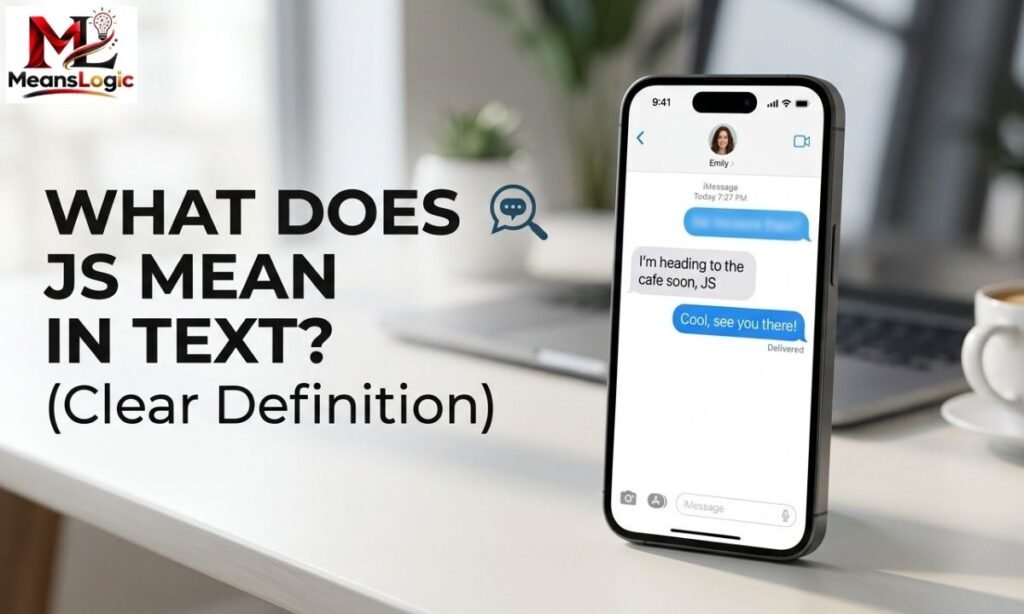
“JS” most commonly stands for just saying or just sayin’. It’s used to add a casual, low-stakes comment to a sentence often to soften criticism, state an opinion, or clarify intent without sounding harsh.
Quick definition:
- JS = Just Saying / Just Sayin’
- Purpose: softens a statement, adds casual emphasis, or signals “no offense intended”
- Common placement: end of a sentence
It’s worth noting “js” occasionally stands for other things depending on context “just something,” “just so [you know],” or, in coding conversations, “JavaScript.” But in everyday texting and social media, “just saying” is by far the dominant meaning, and that’s the definition this guide focuses on.
What Does JS Mean in Texting vs Chat vs Social Media?
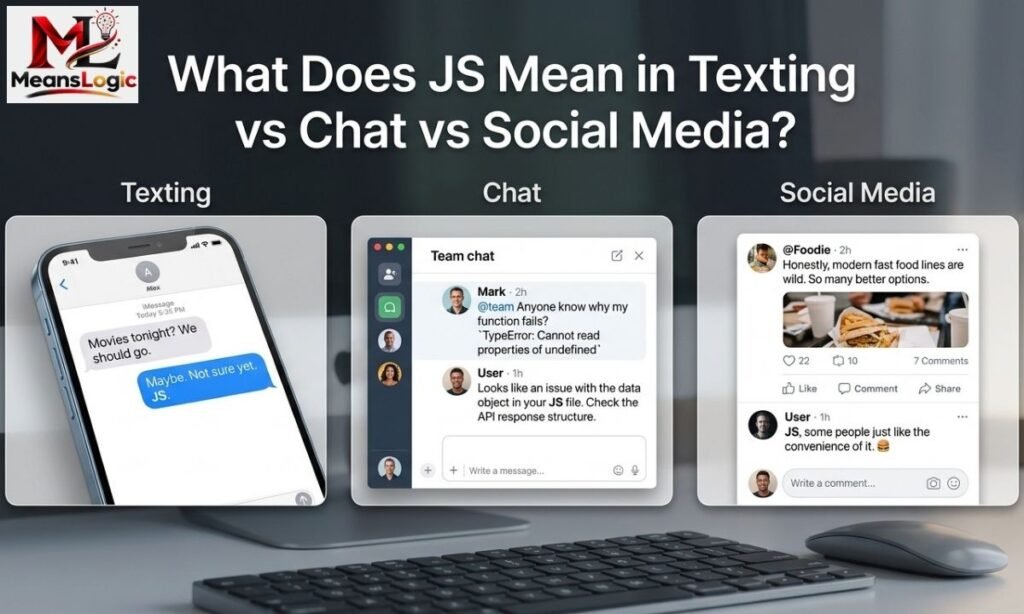
The core meaning stays the same, but tone shifts by platform.
| Platform | Typical Tone of “JS” | Common Use |
| Text messages | Personal, direct | Softening a blunt comment |
| Group chats | Playful, teasing | Light jabs or opinions |
| Social media comments | Passive-aggressive or sarcastic | Calling something out publicly |
| DMs | Honest, low-pressure | Sharing an unfiltered thought |
What Does Js Mean in Text Message?
In a one-on-one text message, “js” usually means the sender wants to express an honest opinion without starting a debate. Example: “You could’ve called first, js.” It signals a soft complaint rather than a confrontation.
Context matters more here than in any other setting, because one-on-one texts carry the most emotional weight. The same three letters can read as a gentle nudge from a close friend or as a loaded jab from someone you’re already on edge with. Before reacting, it helps to think about the relationship, the recent conversation history, and whether the message fits a pattern of genuine feedback or repeated passive digs.
Js Meaning in Text Slang
As slang, “js” belongs to the same family as “tbh,” “ngl,” and “fr” ICL short tags that add tone rather than new information. It rarely stands alone; it usually follows a statement to color how that statement should be read.
These tonal tags exist because plain text strips out facial expressions, pauses, and vocal inflection. Slang like “js” partly fills that gap, acting as a stand-in for the shrug or half-smile that would normally accompany the comment in person. Without it, the same sentence can land far more harshly than intended.
Js Meaning in Text What it Really Means Tiktok
On TikTok, “js” often appears in captions or comments as a way to drop an opinion casually, almost daring people to disagree. It’s frequently paired with humor or sarcasm, and creators use it to state hot takes while keeping a light, non-confrontational tone even when the comment is pointed.
Comment sections in particular use “js” as a shield. A viewer can post a critical or blunt take on a video, tack on “js,” and effectively signal “don’t come for me, I’m just sharing an opinion.” It softens public criticism just enough to avoid backlash while still getting the point across clearly.
The Hidden Tone Behind “JS” (What People Really Mean)
“JS” rarely means what it literally says. Underneath the casual phrasing, it often carries:
- A genuine complaint the sender doesn’t want to escalate
- An opinion they’re not fully committed to defending
- A subtle way of testing your reaction before going further
- Mild sarcasm dressed up as neutrality
Recognizing this hidden layer helps you respond appropriately instead of taking the message at pure face value or dismissing it entirely. The words “just saying” tell you almost nothing on their own; the real meaning lives in the timing, the relationship, and what was said right before it.
How “JS” Changes Meaning in a Sentence?
Where “js” lands and what precedes it changes the entire tone.
| Sentence | Likely Meaning |
| “You’re always late, js.” | Mild frustration |
| “js think you’d look great in blue” | Genuine compliment |
| “not mad, js saying” | Reassurance, low tension |
| “js noticed you didn’t reply” | Passive-aggressive nudge |
Notice that “js” placed at the start of a sentence tends to soften an upcoming opinion before it’s delivered, while “js” placed at the end tends to walk back or cushion what was just said. That small positioning choice is a strong signal of intent, even though the word itself doesn’t change.
When You Should Use “JS” in Text Messages
Use “js” when:
- You want to share a light opinion without sounding demanding
- You’re softening feedback among friends
- You want to keep the tone casual and non-confrontational
- The topic is low-stakes (plans, style, small preferences)
Used in the right context, “js” keeps conversations relaxed and prevents small comments from feeling like formal criticism. It works best between people who already trust each other and understand the shorthand the same way.
When NOT to Use “JS” (Avoid These Situations)
Avoid “js” when:
- Discussing serious relationship issues
- Giving feedback in professional or work messages
- The other person is already upset it can feel dismissive
- You actually need a direct, clear answer
In these situations, “js” tends to add ambiguity exactly when clarity matters most. If the stakes are high or emotions are already involved, it’s almost always better to say what you mean plainly.
Better Alternatives to “JS” Based on Tone
| Tone You Want | Alternative to “JS” |
| Honest but gentle | “Just my thoughts, but…” |
| Fully direct | “I think…” (drop the softener) |
| Reassuring | “No pressure, just an idea” |
| Professional | “For what it’s worth…” |
Swapping in a full phrase instead of a vague abbreviation costs you a few extra characters but removes most of the guesswork for the person reading it especially useful in messages where tone is easy to misjudge.
Real-Life Examples of “JS” in Conversations
- Friend group chat: “We should’ve left earlier, js.” → Light complaint, no real tension.
- Dating text: “js think you’re cooler than you realize” → Genuine compliment.
- Work-adjacent Slack DM: “the deck looked rushed, js” → Risky; reads as unprofessional criticism.
- Family group chat: “grandma’s recipe tastes different this year, js” → Harmless observation, usually taken as a light joke.
- Roommate text: “the dishes have been there since Tuesday, js” → Passive reminder that can read as annoyance if repeated often.
These examples show the same word behaving completely differently depending on the relationship and the subject. Context, not the abbreviation itself, does most of the work in shaping how a “js” comment is received.
How to Respond to “JS” (Smart Replies That Work)
When someone sends you a “js” comment, you don’t need to overreact or ignore it. Try:
- “Fair point, noted.”
- “Lol okay, duly noted.”
- “Wait, are you actually upset about this?”
- “Appreciate the honesty.”
These replies acknowledge the comment without escalating or dismissing it. If a “js” message genuinely stings or feels loaded, it’s also fine to ask directly: “Is something bothering you?” That question cuts through the hedge and invites an honest answer instead of leaving both people guessing.
Generational Differences in JS Usage
Gen Z tends to use “js” liberally, often layering it with sarcasm or humor. Millennials use it more sparingly, typically to soften genuine feedback. Older generations use it least, and when they do, it usually reads as literal and sincere rather than tonal shorthand.
This gap explains a lot of cross-generational confusion. A parent who reads “js” as a literal, neutral statement may completely miss the sarcasm or subtext a younger texter intended, while a teenager might assume everyone reads the same hidden tone they do.
Platform Differences: Where “JS” Feels Different
| Platform | Feel of “JS” | |
| iMessage/SMS | Personal, sincere | |
| Instagram comments | Public opinion, semi-bold | |
| Twitter/X | Blunt, often sarcastic | |
| Snapchat | Playful, fleeting |
The Psychology Behind “JS”
Linguists describe “js” as a hedge phrase that reduces the speaker’s commitment to a statement. Hedging lowers social risk: if the comment lands badly, the sender can retreat behind “I was just saying.” It’s a small verbal safety net built into casual digital speech.
This is similar to how people soften opinions in face-to-face conversation with phrases like “no offense, but…” Text just compresses that same social instinct into two letters, which is efficient but also easy to misread without a vocal tone to back it up.
JS in Memes and Internet Culture (2026)
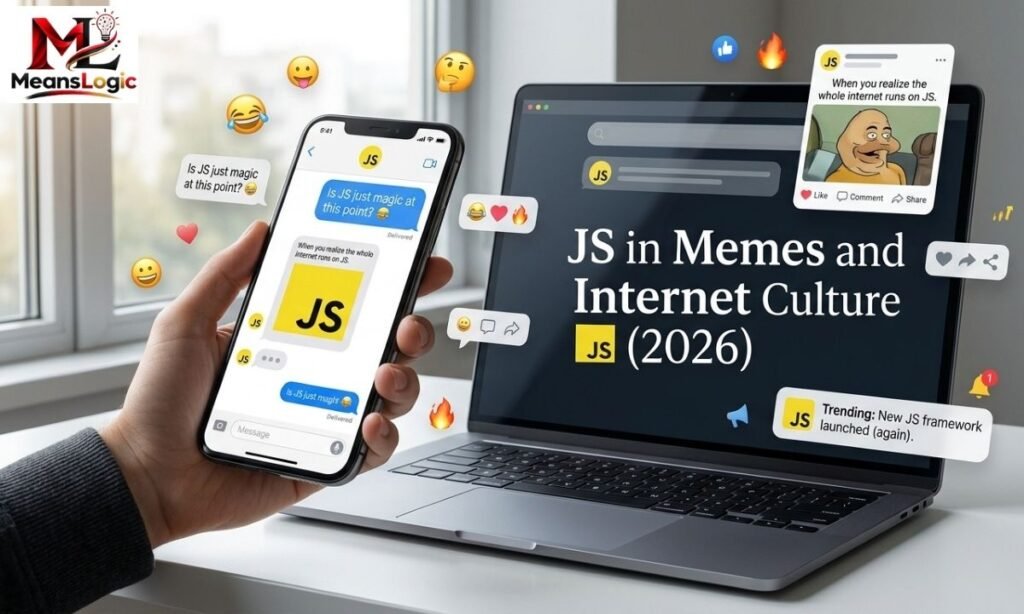
In meme culture, “js” is often used ironically paired with an obviously strong opinion to highlight sarcasm. A caption like “the movie was mid, js” reads as a confident take wrapped in false casualness, which is part of the joke.
Meme formats have also started poking fun at “js” itself mocking how the phrase pretends to be neutral while clearly carrying an opinion. This self-aware humor shows just how recognizable the tonal trick behind “js” has become across internet culture.
Quick Guide: How to Use “JS” Without Sounding Passive-Aggressive
- Pair it with something genuinely neutral, not a hidden jab
- Avoid using it right after an argument
- Don’t stack it with other hedges (“just js saying tbh”)
- If your point is serious, drop “js” entirely
Following these habits keeps “js” doing what it does best, adding light tone instead of quietly turning into a tool for veiled criticism.
JS vs Other Slang: Know the Difference
| Term | Meaning | Tone |
| JS | Just saying | Casual, hedging |
| TBH | To be honest | Sincere disclosure |
| NGL | Not gonna lie | Blunt honesty |
| FR | For real | Emphasis, agreement |
While these terms often appear in the same sentences, they serve different jobs: “js” softens, “tbh” and “ngl” disclose honesty, and “fr” emphasizes sincerity or agreement. Mixing them up can muddy your intended tone.
How to Use Slang in Messages the Right Way?
- Match slang to the relationship close friends tolerate more than coworkers
- Read the room before adding tonal shorthand
- Don’t rely on slang to carry serious meaning
- When in doubt, spell out your intent clearly
Slang works best as seasoning, not the main message. A text built entirely around abbreviations often loses the very clarity it’s trying to add efficiency to.
Texting Etiquette 2025–2026: What’s Changing
Texting norms are shifting toward clarity over cleverness, especially in mixed-age group chats and hybrid work messaging. More people are dropping ambiguous hedges like “js” in favor of direct, kind phrasing particularly when tone can’t be read through text alone.
This shift is partly a response to how much miscommunication ambiguous slang has caused in relationships, workplaces, and friend groups. As texting remains the primary way people communicate day to day, more users are prioritizing being understood over sounding effortlessly casual.
Case Study: When “JS” Caused Miscommunication
A common scenario: someone texts “you seemed distant today, js” intending mild concern. The recipient reads it as an accusation, replies defensively, and a small comment spirals into a real argument all because “js” left too much room for interpretation.
The fix in hindsight is usually simple: naming the actual feeling directly, like “I felt a little disconnected from you today, everything okay?” would have carried the same concern without the ambiguity that triggered the defensive reaction.
Clear Communication Beats Clever Shortcuts
Slang like “js” is useful, but it’s not a substitute for clarity. When something actually matters, spelling out your intent prevents misreadings that abbreviations can’t fix. Save the shorthand for low-stakes moments.
Frequently Asked Questions
What does JS mean in a text from a girl or guy?
It almost always means “just saying” a casual way to share an opinion without pressure.
Is JS rude in texting?
Not inherently, but it can feel dismissive if used after an argument or serious conversation.
What’s the difference between JS and TBH?
“JS” softens a statement; “TBH” signals the sender is being deliberately honest or blunt.
Do older generations understand JS?
Not always many read it literally rather than as tonal shorthand, so context matters.
Should I use JS in work messages?
Generally no it can come across as unprofessional or unclear in formal settings.
Final Thought
“JS” is a small piece of digital language carrying a lot of tonal weight. Used well, it softens honest opinions and keeps conversations light; used carelessly, it creates confusion. Knowing when to use it and when to just say what you mean makes you a clearer, more thoughtful texter.

I’m a meaning-focused writer with 4 years of experience exploring words, names, phrases, symbols, and everyday expressions. My goal is to make confusing meanings simple, clear, and easy to understand. I research each topic carefully to provide useful and reliable explanations. Through MeansLogic, I help readers discover meanings and understand language with confidence.


6 thoughts on “JS Meaning in Text (2026): What It Really Means and How to Use It Right”