
If you’ve ever received a text that just said “wtv” and wondered whether the person was annoyed, bored, or simply typing fast, you’re not alone. This short abbreviation shows up everywhere group chats, comment sections, DMs and its tone can shift completely depending on context.
In this guide, we’ll break down exactly what WTV means, where it came from, how it’s used across different platforms and age groups, and when you should (or shouldn’t) use it yourself. By the end, you’ll be able to read the tone behind “wtv” like a pro and respond the right way every time.
What Does WTV Mean in Slang?
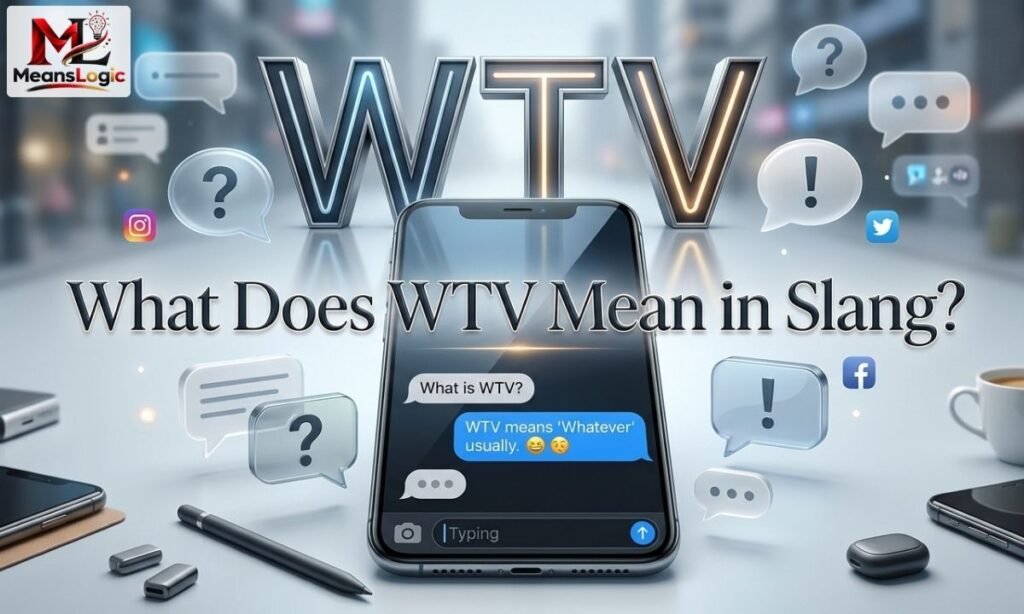
WTV is a texting abbreviation for “whatever.” It’s used the exact same way you’d use the full word to show indifference, agreement, dismissal, or mild annoyance just typed faster.
Because it drops most of the vowels, WTV fits the classic pattern of internet shorthand (similar to “TBH,” “IDK,” or “NGL”). It’s not a new word with its own meaning; it’s simply a compressed version of an existing one.
Quick definition:
| Term | Meaning | Tone |
| WTV | Whatever | Neutral to dismissive |
| Full form | Whatever | Same, just spelled out |
Why Is “WTV” So Popular?
WTV has stuck around for a few simple reasons:
- Speed Three letters instead of eight saves time when typing on a phone.
- Versatility It works in almost any conversation, from casual chats to arguments.
- Low commitment It lets someone respond without fully engaging or explaining themselves.
- Universal recognition Most texters instantly know what it means, so there’s no confusion.
It’s also just satisfying to type. Short abbreviations like this reduce the effort of a reply while still getting the point across, which is exactly what texting culture rewards.
What Does Wtv Mean in Text Messages
In a text conversation, “wtv” usually shows up as a quick reply when someone doesn’t want to argue further, doesn’t have a strong opinion, or is subtly annoyed but doesn’t want to make a big deal out of it.
Common examples in texting:
- “Do you want pizza or tacos?” → “wtv, either is fine”
- “I already made plans without asking you.” → “wtv.”
- “You still coming tonight?” → “idk, wtv happens happens”
Notice how the meaning shifts based on punctuation and context. A period after “wtv.” often signals irritation, while “wtv” without punctuation, followed by more text, usually just means “I don’t mind.”
Origin and History of WTV
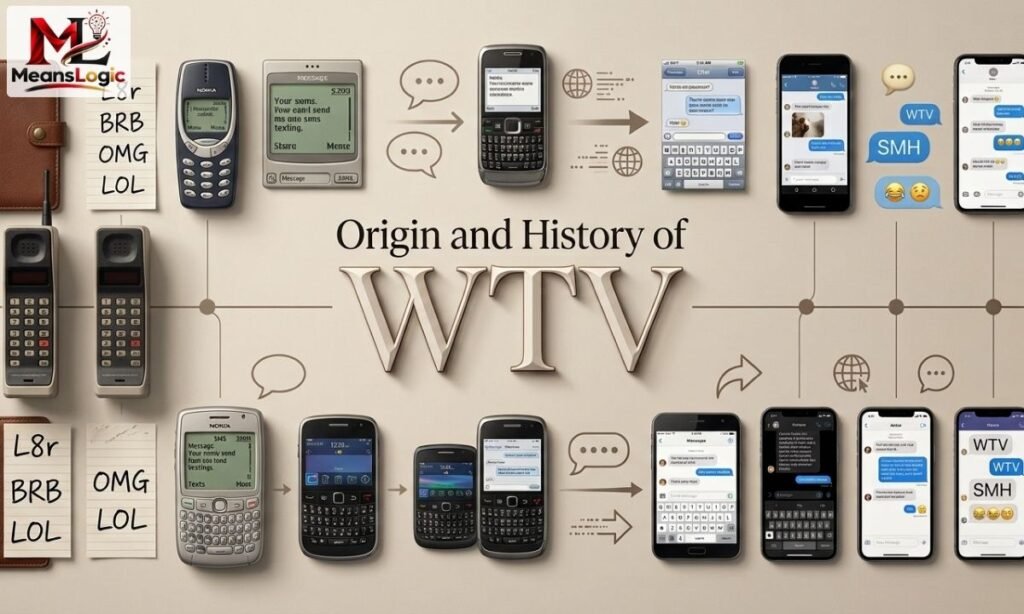
Like most texting abbreviations, WTV grew out of the SMS era of the early-to-mid 2000s, when character limits and slow keypads pushed people to shorten everything possible.
“Whatever” itself has a much older history as a dismissive phrase in English, but it exploded as a cultural catchphrase in the 1990s, largely thanks to teen movies and shows where characters used it often paired with a hand gesture to shut down an argument.
Once texting became mainstream, “whatever” was an obvious candidate for abbreviation. WTV joined a wave of similar shortenings (BTW, IDC, NVM) that were built for speed rather than style, and it carried the same attitude the spoken word already had.
The Emotional Meaning Behind “WTV”
WTV isn’t just about saving keystrokes it carries emotional weight. Depending on the situation, it can express:
- Genuine indifference “no real preference either way”
- Passive dismissal shutting down a conversation without explaining why
- Suppressed frustration a way of saying “I’m annoyed but I don’t want to fight” (not too far from how people vent with an FML moment)
- Casual agreement “sure, that’s fine”
This range is exactly why WTV can be confusing. The same word can mean “I genuinely don’t care” or “I’m upset and don’t want to talk about it,” and the only way to tell the difference is context, punctuation, and tone of the conversation leading up to it.
How to Use WTV in a Sentence (Real Examples)
Here are natural examples showing WTV in different tones:
- Casual/neutral: “wtv you want to watch is fine with me”
- Dismissive: “wtv, I don’t even care anymore”
- Agreement: “sure, wtv works”
- Sarcastic: “oh wtv, like that’s ever going to happen”
- Annoyed shutdown: “wtv. forget I said anything”
As you can see, the surrounding words do most of the work WTV itself is a blank canvas that takes on the tone of whatever comes before or after it.
WTV Meaning for Gen Z and Younger Users
Among Gen Z, WTV is used constantly in texting and social media comments, often stripped of punctuation entirely to keep the tone light and low-effort. It’s common in:
- Group chat replies when nobody wants to make a decision
- Comment sections as a quick reaction to something unimportant
- Story replies on Instagram/Snapchat as a casual response
Gen Z also frequently pairs WTV with other slang for effect, like “wtv fr” (whatever, for real) or “wtv tbh” (whatever, to be honest), stacking abbreviations the same way older generations might string together full sentences similar to how “js” or “icl” get tacked onto the front of a sentence for emphasis.
WTV Meaning in Different Contexts
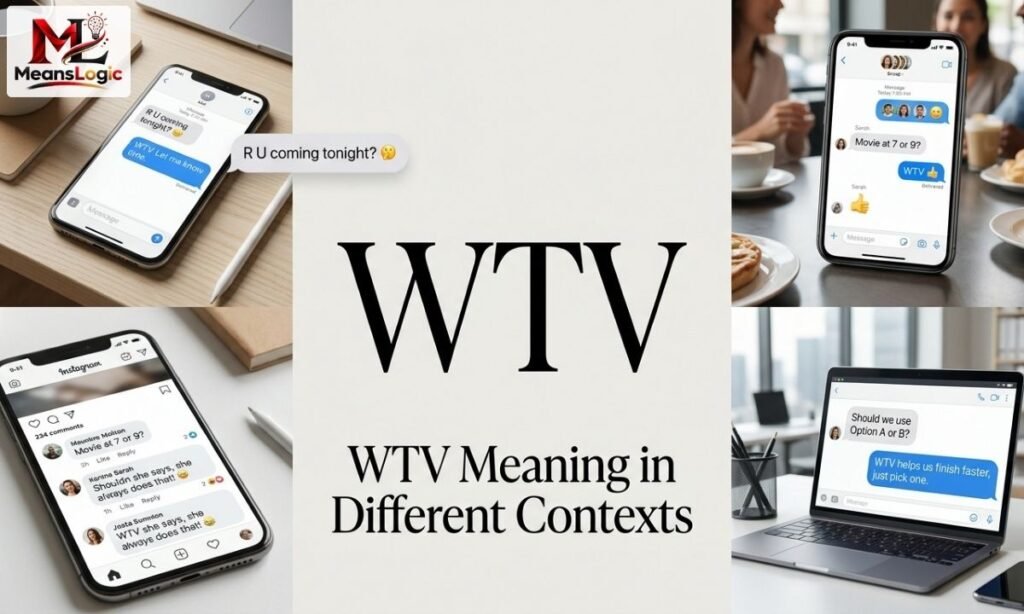
| Context | Likely Meaning | Example |
| Friendly chat | Genuine indifference | “wtv movie, you pick” |
| Argument | Dismissal/shutting down | “wtv, I’m done talking about this” |
| Group decision | Easygoing agreement | “wtv works for me” |
| After bad news | Coping/downplaying | “wtv, it’s not a big deal” |
| Sarcastic reply | Disbelief or mockery | “yeah wtv, sure it will” |
The same three letters flex to fit almost any emotional register, which is part of what makes WTV so widely used.
WTV vs. Whatever: Is There a Difference?
Functionally, no WTV and “whatever” mean the same thing. The difference is purely stylistic.
| Feature | WTV | Whatever |
| Setting | Texting, DMs, comments | Speech, formal writing, texting |
| Formality | Very informal | Informal to neutral |
| Speed | Faster to type | Slower to type |
| Tone perception | Can feel more casual/blunt | Can feel more expressive |
Some people find “wtv” reads as colder or more abrupt simply because it’s shorter and skips vowels, even though the underlying meaning hasn’t changed at all.
Common Variations and Related Slang
WTV often appears alongside or gets swapped out for other short dismissive phrases:
- WTVR a slightly longer, less common variant
- IDC “I don’t care”
- W/e an older-style shorthand for “whatever”
- NVM “nevermind,” used similarly to drop a topic
- K a minimal, sometimes cold way to end a conversation
- Meh expresses indifference without dismissing the person
These terms overlap in meaning but carry slightly different tones, so swapping one for another can subtly change how a message lands.
When NOT to Use WTV
WTV isn’t the right fit for every conversation. Avoid it when:
- You’re talking to someone in a position of authority (boss, teacher, client)
- The conversation is emotionally serious (breakups, conflict resolution, apologies)
- You actually do care about the outcome WTV signals the opposite
- You’re writing something formal, like an email or a professional message
- The other person has explicitly asked you to take something seriously
Using WTV in these moments can come across as careless, immature, or even hurtful, even if that’s not your intention.
Better Alternatives to WTV (Depending on Situation)
If WTV doesn’t quite fit the moment, here are more considerate alternatives:
- “I’m okay with either option” for genuine indifference
- “Let’s talk about this when we’re both calm” for tense conversations
- “I don’t have a strong preference, what do you think?” for group decisions
- “That’s fine with me” for polite agreement
- “I hear you, let’s figure it out” for de-escalating conflict
These alternatives keep the same easygoing spirit as WTV, but without the risk of sounding dismissive or short.
Is WTV Rude?
WTV isn’t inherently rude, but it can come across that way depending on tone, punctuation, and context. A few rules of thumb:
- “wtv, sounds good!” reads as relaxed and friendly
- “wtv.” reads as blunt or annoyed, especially with a period
- “wtv” (no reply after) can feel like the conversation is being shut down
Because texting strips out tone of voice and facial expressions, WTV is one of those words that’s easy to misread. If in doubt, it’s worth adding a bit more context so the other person doesn’t misinterpret you.
How WTV Is Used Across Platforms
WTV shows up slightly differently depending on where it’s used:
- Texting (SMS/iMessage): Quick, personal replies, often with lowercase and no punctuation
- Instagram/Snapchat: Casual comments or story replies, sometimes with emojis added for tone
- TikTok comments: Reaction to something unimportant or as a throwaway joke
- Discord/gaming chats: Fast responses during group conversations, low-stakes tone
- Twitter/X: Sarcastic or dismissive replies in public threads
The core meaning stays the same everywhere, but the emotional intensity tends to be lowest in private texts and highest in public comment sections, where sarcasm is more common.
Psychological Meaning Behind Saying “Whatever” or “WTV”
Psychologically, “whatever” (and by extension, WTV) is often used as an emotional shield. It lets someone:
- Avoid vulnerability by pretending not to care
- End a conversation before it becomes uncomfortable
- Protect themselves from disappointment by lowering expectations
- Assert a small amount of control when they feel unheard
In many cases, someone saying “wtv” cares more than they’re letting on the word is a way of disengaging without admitting that something actually bothers them.
WTV in Relationships & Friendships

In relationships and friendships, WTV can be one of the trickiest words to send or receive. It’s often used:
- To avoid starting a fight, even when something is bothering the person
- As a passive-aggressive signal that something is wrong
- To genuinely express flexibility on small decisions (what to eat, where to go)
If a partner or friend replies with “wtv” during a disagreement, it’s usually worth checking in rather than taking it at face value it may be masking real frustration rather than true indifference.
WTV in School and Teen Slang
Among students, WTV is a staple of everyday texting and group chat culture. It’s commonly used to:
- Respond to group project decisions without much thought
- React to drama or gossip without getting involved
- Brush off minor disagreements with friends
- Signal boredom during a conversation that’s dragging on
In school settings, it’s rarely meant seriously it’s more of a low-effort filler response than a strong statement.
Is WTV Appropriate in Professional Settings?
No WTV should generally be avoided in professional or formal communication, including emails, workplace chat tools like Slack or Teams, and any conversation with clients, managers, or coworkers you don’t know well.
Instead, professional alternatives include:
- “I’m flexible on this, whichever works best for the team.”
- “Either option works for me.”
- “No strong preference from my side.”
These phrases communicate the same open-ended attitude as WTV, but in a way that reads as professional rather than careless.
Common Misunderstandings About WTV
A few misconceptions worth clearing up:
- “WTV always means someone is mad.” Not true it often just signals indifference.
- “WTV is only used by teens.” It’s common across age groups, especially in casual texting.
- “WTV is a new slang term.” It’s simply a shortened version of a word that’s been around for decades.
- “Using WTV means you don’t care about the person.” Usually it’s about the specific topic, not the relationship itself.
WTV vs. Similar Slang Abbreviations
| Abbreviation | Meaning | Typical Tone |
| WTV | Whatever | Neutral to dismissive |
| IDC | I don’t care | Slightly stronger indifference |
| NVM | Nevermind | Dropping a topic |
| IDK | I don’t know | Uncertainty |
| TBH | To be honest | Honesty/opinion |
| NGL | Not gonna lie | Honesty/confession |
While these abbreviations sometimes overlap in casual use, each has its own specific shade of meaning that WTV doesn’t fully replace.
How to Respond to Someone Who Says “WTV”
If someone sends you “wtv,” how you respond depends on the context:
- If it seems neutral: Just continue the conversation normally.
- If it seems annoyed: Ask a gentle follow-up, like “you good?” or “did I say something wrong?”
- If it’s during an argument: Give them space, then revisit the topic calmly later.
- If it’s about a small decision: Just go ahead and choose, since they’ve signaled they’re flexible.
Reading the tone before reacting helps avoid unnecessary misunderstandings.
WTV in Different Cultures and Languages
While WTV itself is an English-language abbreviation, the underlying concept a short, dismissive “whatever” exists in many languages and cultures:
- Spanish speakers often use “da igual” or “wtv” borrowed directly in bilingual texting
- French speakers might use “bof” or “peu importe” similarly
- In many non-English texting communities, English slang like WTV is adopted directly, especially among younger, internet-fluent users
This shows how texting slang often spreads globally, even when it originates from English-speaking internet culture.
Why People Love Using WTV
WTV remains popular because it’s efficient, flexible, and emotionally low-risk. In just three letters, it can:
- End a debate without conflict
- Show flexibility without seeming indecisive
- Express mild frustration without escalating a conversation
- Fit into virtually any messaging platform or context
It’s the texting equivalent of a shrug quick, universally understood, and easy to deploy in almost any situation.
Summary: What Does WTV Mean?
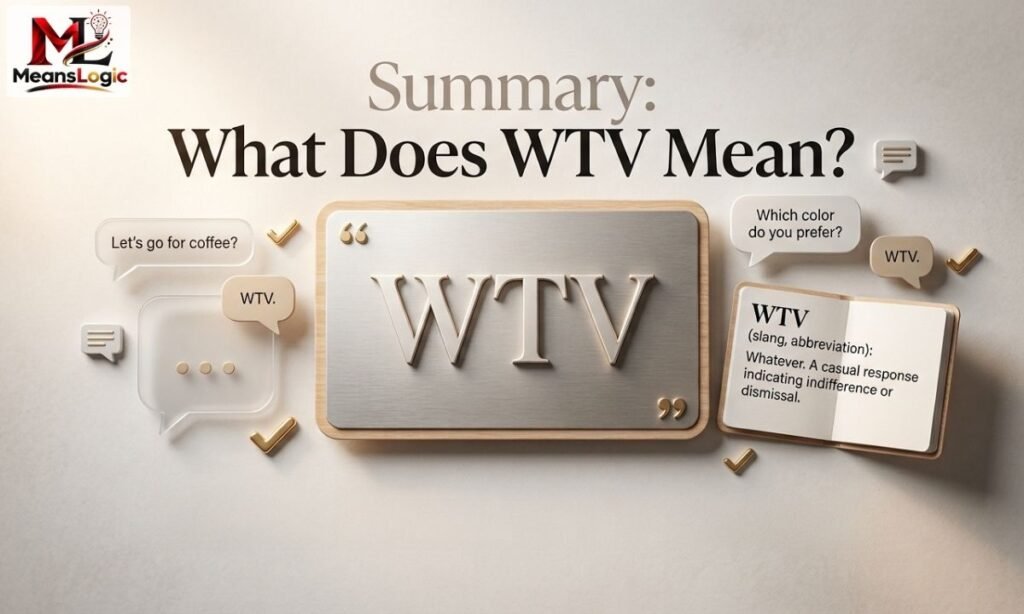
WTV is short for “whatever,” used to express indifference, casual agreement, or mild dismissal in texting and online conversations. Its meaning shifts based on tone, punctuation, and context it can be friendly, neutral, sarcastic, or slightly annoyed, all depending on how it’s used.
While it’s a staple of casual texting and social media, it’s best avoided in professional settings or emotionally serious conversations, where clearer, more thoughtful language communicates better.
Frequently Asked Questions
What does WTV mean in texting?
WTV means “whatever,” used to show indifference or casual agreement.
Is WTV the same as whatever?
Yes, WTV is simply a shortened spelling of “whatever.”
Is WTV rude to say?
Not inherently its tone depends on punctuation and context.
Can WTV mean someone is upset?
Yes, it can signal suppressed frustration, especially with a period at the end.
Is it okay to use WTV at work?
No, it’s best to avoid it in professional or formal communication.
Does WTV mean the same thing everywhere?
The core meaning stays the same, but tone can shift slightly by platform.
What’s a polite alternative to WTV?
Phrases like “I’m flexible” or “either works for me” convey the same idea more politely.
Final Thoughts
WTV is a small abbreviation with a surprisingly wide emotional range. Whether it’s used to keep things casual, avoid conflict, or quietly signal frustration, understanding the context around it makes all the difference.
Next time you see “wtv” in a text, take a second look at the punctuation and the conversation leading up to it chances are, it’s telling you more than three letters usually would.

I’m a meaning-focused writer with 4 years of experience exploring words, names, phrases, symbols, and everyday expressions. My goal is to make confusing meanings simple, clear, and easy to understand. I research each topic carefully to provide useful and reliable explanations. Through MeansLogic, I help readers discover meanings and understand language with confidence.


4 thoughts on “WTV Slang Meaning: What Does “WTV” Mean and How to Use It in Everyday Conversations”